Walking the Wilderness

I walk along the wilderness road
in the footsteps of many before
terrace houses the flyover five-a-side

peaceful but for the low drone
and whoosh of the dual carriage way
broken by the passing of the Saltburn train

I pass the grey wire fences
silent wide road, lost community
bright buses quietly scurry
approaching the old river, tranquil

broken by a noisy speeding car

Jigsaw walls, echoing bridge
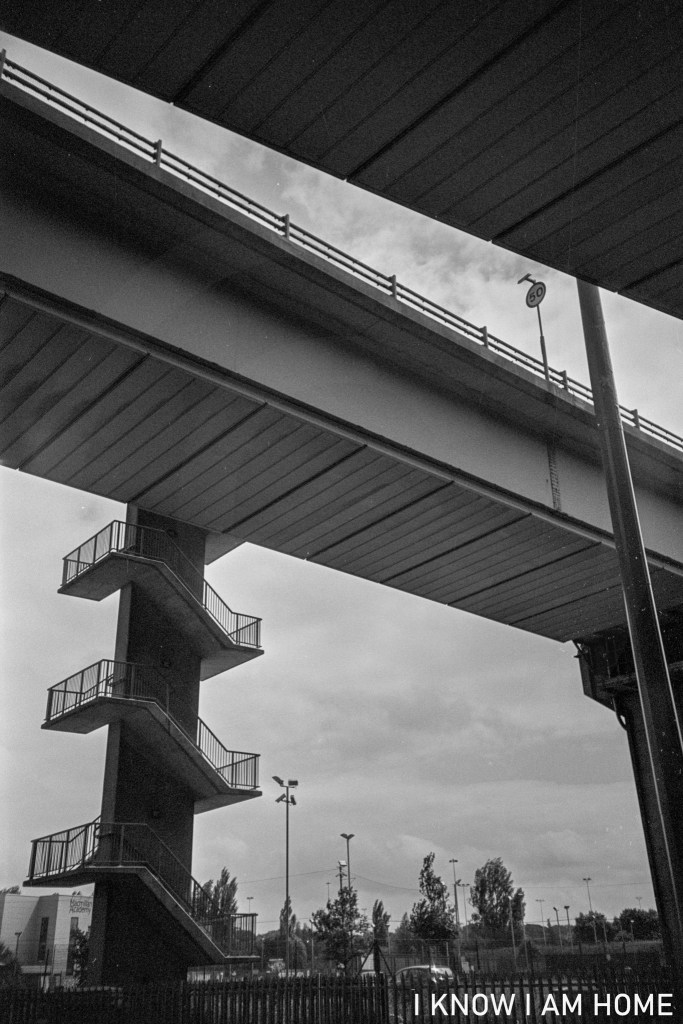
Flyover
A66 (15/07/2021)
Camera: Lomo LC-A (USSR manufactured)
Lens: Minitar 1 32mm f/2.8
Film: Foma 100
Developed In: Compard R09
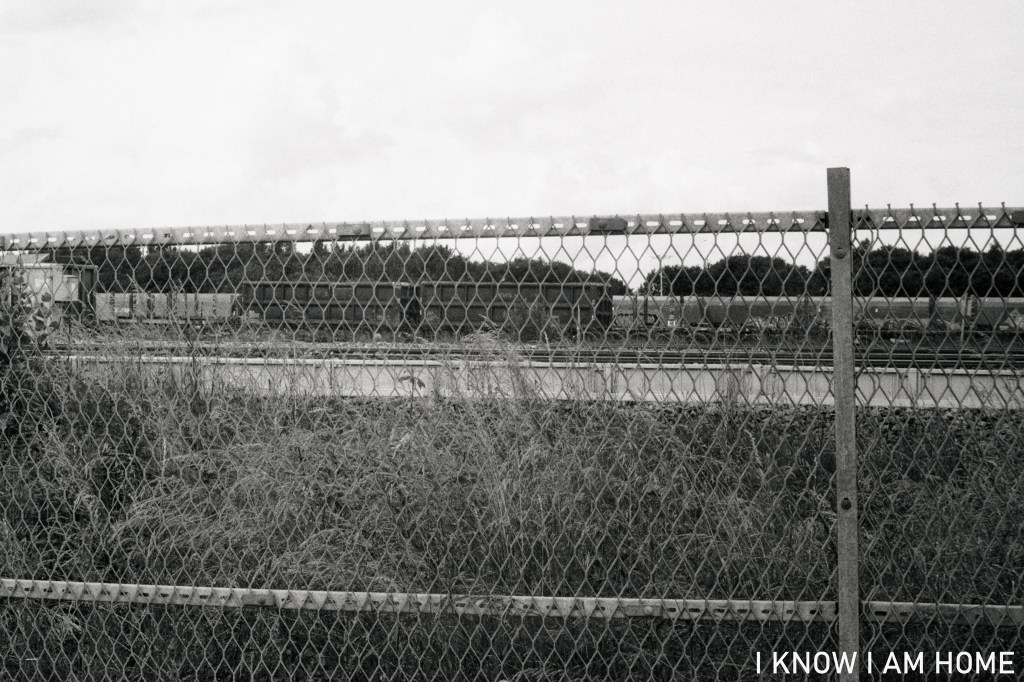
Grey Wire Fences
Wilderness Road (04/07/2021)
Camera: Fed 4
Lens: Industar-61
Film: ORWO N74+
Developed In: Compard R09
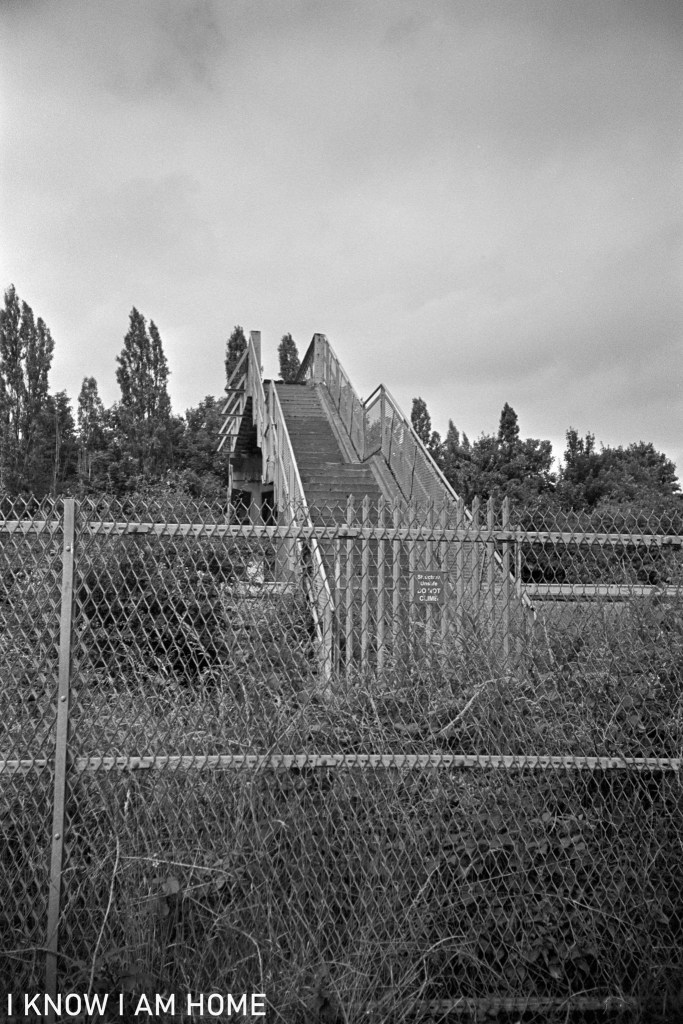
Bridge to nowhere
Wilderness Road (15/07/2021)
Camera: Lomo LC-A (USSR manufactured)
Lens: Minitar 1 32mm f/2.8
Film: Foma 100
Developed In: Compard R09

Today Stockton Road, running from Newport to the Mandale triangle, can be quiet. This stillness and vacuity broken momentarily by the passing of the scheduled stopping bus services between Middlesbrough and Stockton, by often speeding cars taking advantage of the long straights of the road or by trains passing by.
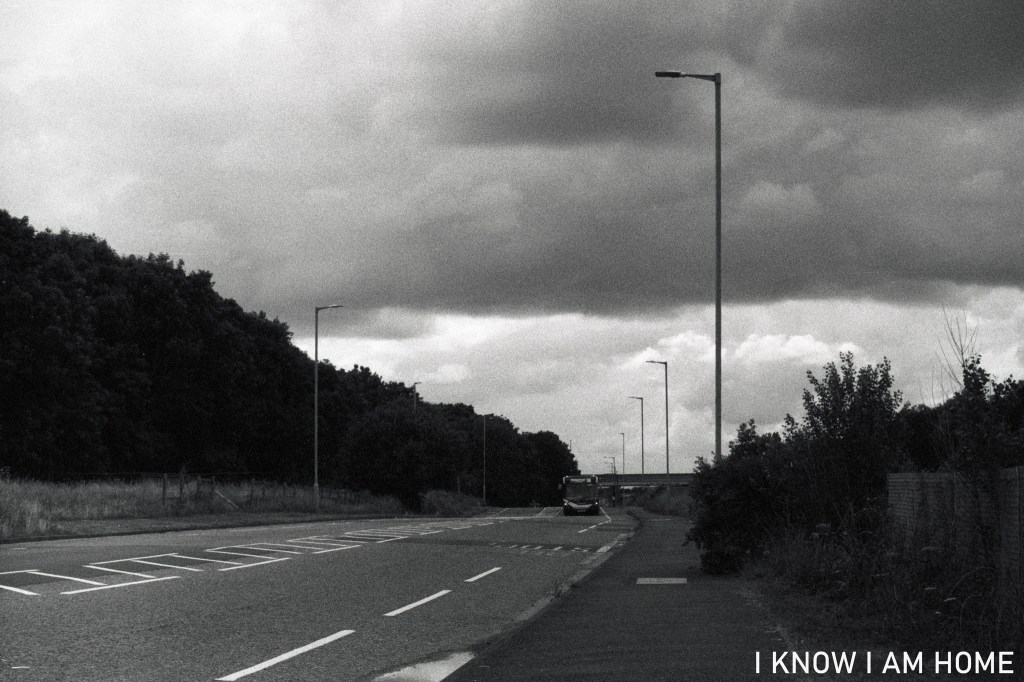
Bus Stop
Wilderness Road (04/07/2021)
Camera: Fed 4
Lens: Industar-61
Film: ORWO N74+
Developed In: Compard R09

The Mandale end of the Wilderness Road, in the area pictured below, was surrounded by two areas of brewing industry, marked on an OS map published in 1899 as the North Riding Malthouse and Brewery, however in a larger scale map published in 1915 just one side of the road is taken up with the malthouse of the North Eastern Brewery.
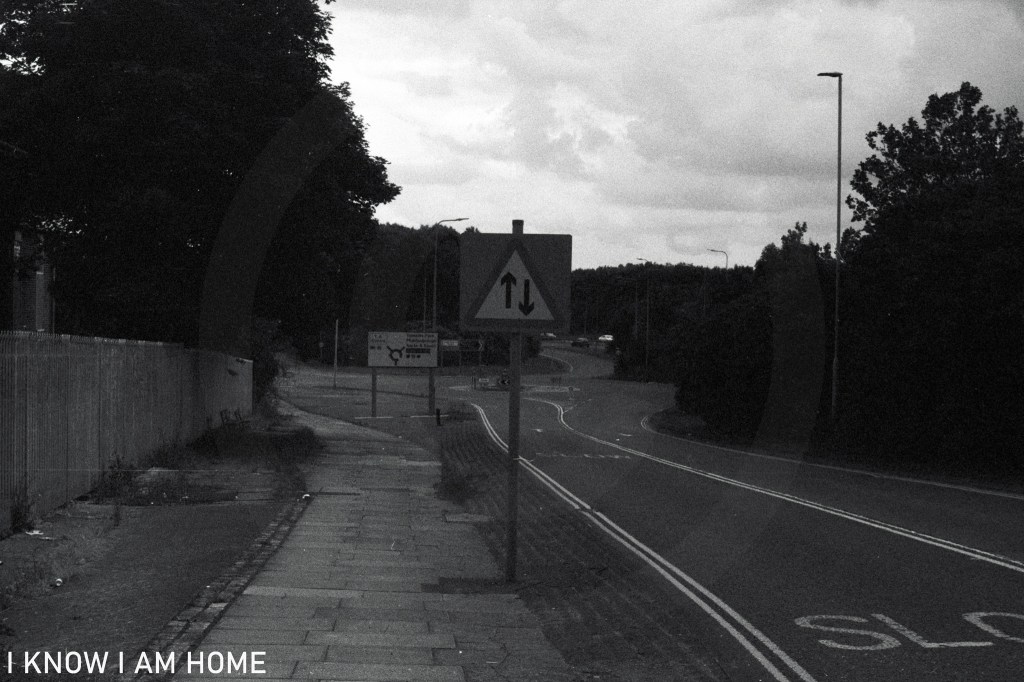
Brewery Bank
Thornaby (04/07/2021)
Camera: Fed 4
Lens: Industar-61
Film: ORWO N74+
Developed In: Compard R09

The road was built between 1856 and 1857 after a bill was passed to authorise the construction of the road through “the wilderness” of reclaimed marshland. Indeed Stockton Road is often referred to as The Wilderness Road. In the 1930’s the road was improved after complaints about potholes and precarious tram lines.

It’s coming home
A66 (15/07/2021)
Camera: Lomo LC-A (USSR manufactured)
Lens: Minitar 1 32mm f/2.8
Film: Foma 100
Developed In: Compard R09

A former popular road being the main and most direct route between Stockton, South Stockton (Thornaby) and Middlesbrough the road has been superseded now by the A66, with most traffic not needing to access the few businesses along The Wilderness Road.
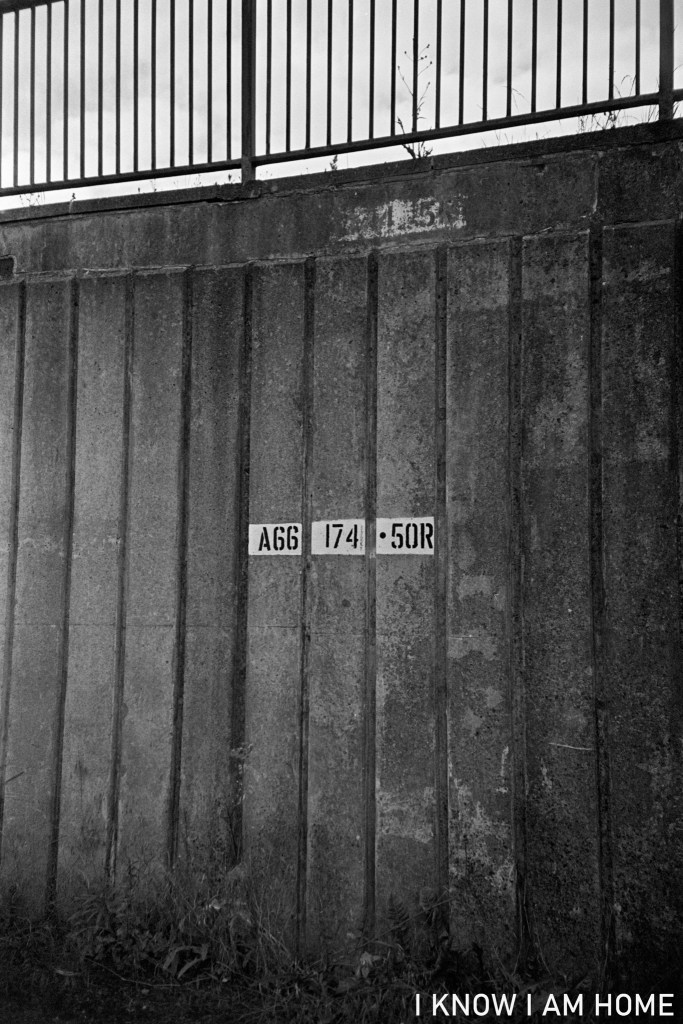
Stencil
A66 (15/07/2021)
Camera: Lomo LC-A (USSR manufactured)
Lens: Minitar 1 32mm f/2.8
Film: Foma 100
Developed In: Compard R09

Back before the expansion of Tees Marshalling Yard (which has changed in operation beyond recognition and the associated traction maintenance depot demolished) and the movement of the main passenger running lines there was the small community of Erimus, with its public house rows of houses and allotments, sitting around the area of the railway yard “viaduct”.
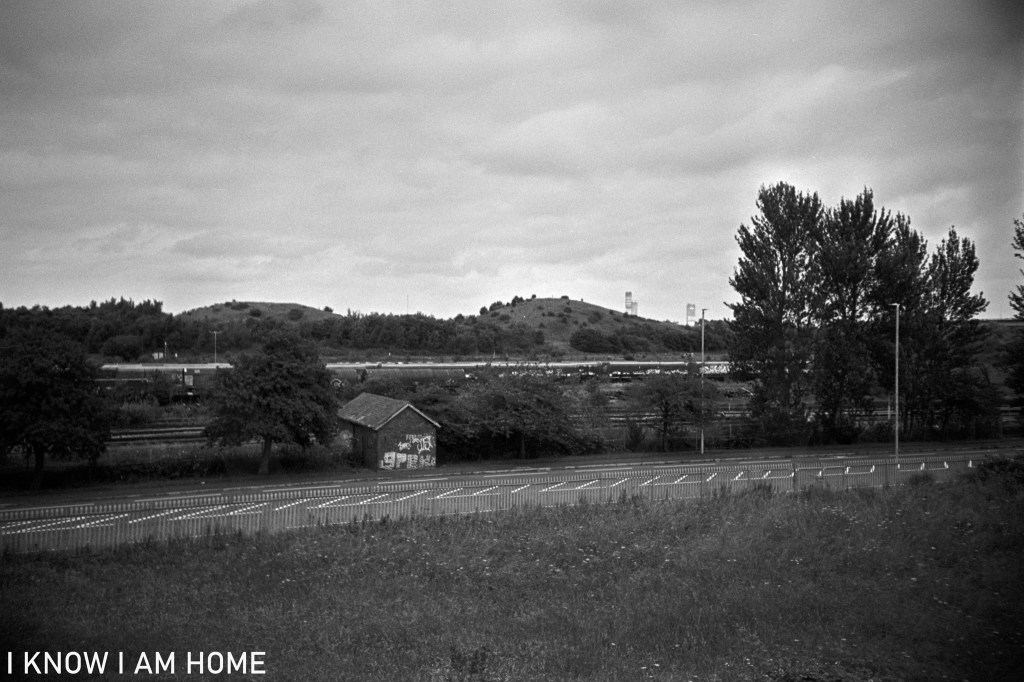
Yard
Wilderness Road (15/07/2021)
Camera: Lomo LC-A (USSR manufactured)
Lens: Minitar 1 32mm f/2.8
Film: Foma 100
Developed In: Compard R09

Once you’ve passed the academy, if you’re travelling from Thornaby toward Middlesbrough, the sight of Newport Bridge through the trees, the start of the terrace dwellings and the “blind school” herald the end of the wilderness road.
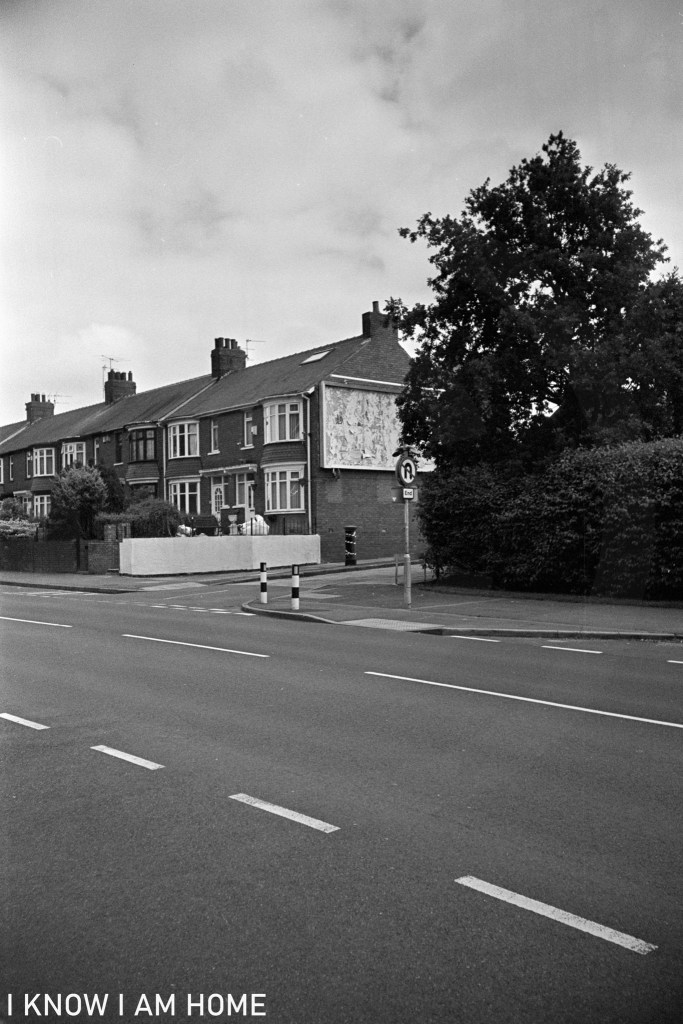
Street Corner
Wilderness Road (15/07/2021)
Camera: Lomo LC-A (USSR manufactured)
Lens: Minitar 1 32mm f/2.8
Film: Foma 100
Developed In: Compard R09

Then you reach the allotments, beyond that the big roundabout and Middlesbrough’s town.
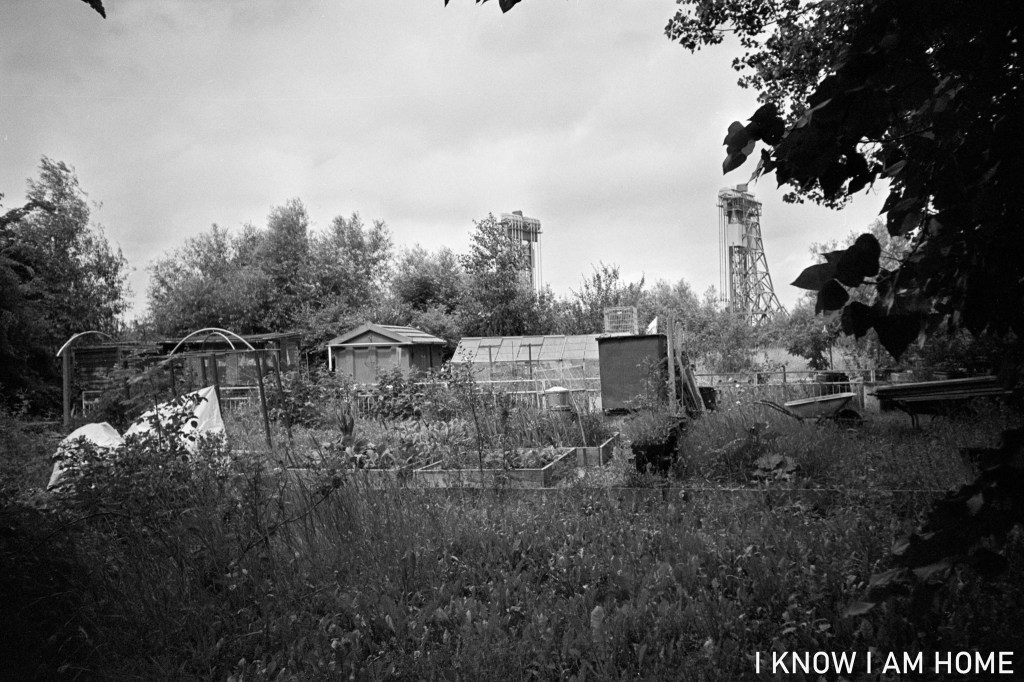
Allotted
Newport (15/07/2021)
Camera: Lomo LC-A (USSR manufactured)
Lens: Minitar 1 32mm f/2.8
Film: Foma 100
Developed In: Compard R09
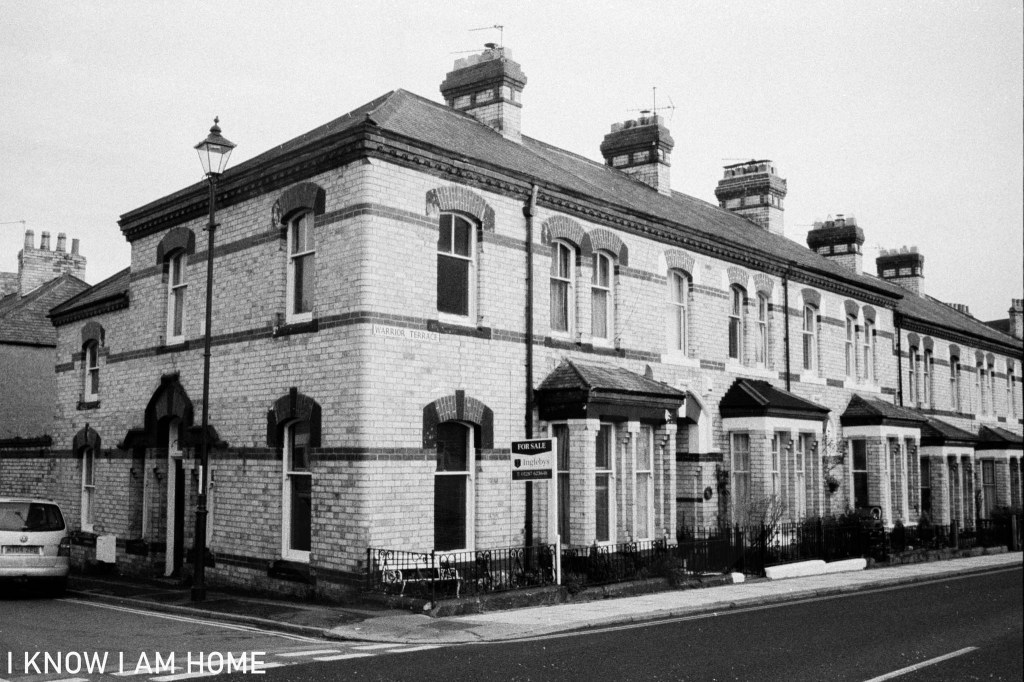
Warrior Terrace, Saltburn

Completed circa 1865 this terrace of six houses was part of George Dickenson’s plan for the seaside town. Dickenson was the winning surveyor and was employed by the Saltburn Improvement Company to draw up a plan for the town. There were design codes imposed by Dickenson for the construction of the town, these stipulated the height of buildings, and building materials used (including the distinctive Pease facing bricks), though the Saltburn Improvement Company’s design codes did not extend to the architectural design of the building.

Some of Dickenson’s plan didn’t come to fruition however. It was planned that the cross roads now formed by Station Street, Windsor Road and Albion Terrace would be “Regent Circus”, a circle of buildings of which the Queens Hotel and the post office were the only actually built.

Warrior Terrace
Saltburn by the Sea
Camera: Olympus Trip 35
Film: Lomography Colour Negative 400
Developed In: Compard R09

Sliding S0005915

This Vickers Machine Gun Pillbox is one of a number of defence structures on the breakwater at South Gare. Over the years shifting sands and coastal erosion has lead to the pillbox becoming dislodged from the original location and sliding down to the beach.

Pillbox
South Gare, Redcar
Camera: Zenit B
Lens: Industar-50
Film: Kentmere 400
Developed In: ADOX Adonal

For obvious reasons during WWII this area was one which was well covered; with surviving anti aircraft gun holdfasts, a large gun emplacement toward the lighthouse, the former submarine mine depot (with its own pillbox) and a number of other pillboxes and wartime related structures. Perhaps more interestingly there is a petroleum warfare site which is now mainly hidden in the sand dunes.

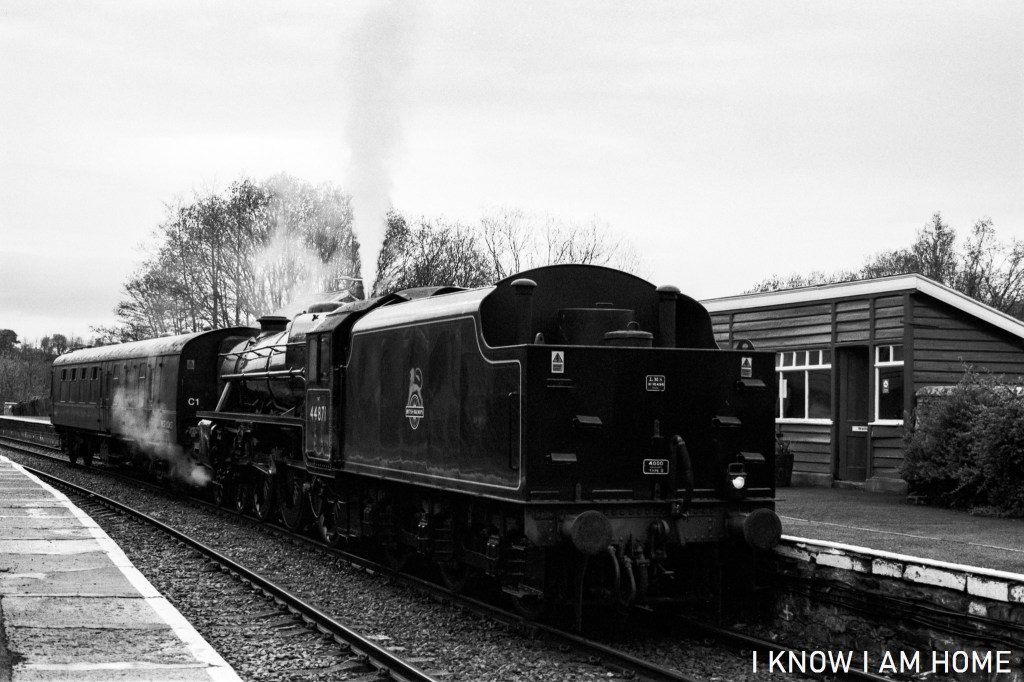
Black 5 at Glaisdale

Built between 1934 and 1951 the Stanier designed Class 5 4-6-0 locomotives were no-nonsense multi-traffic locomotives, pulling both passengers and freight. Eight hundred and forty two of these locomotives were built, eighteen survive in preservation today. One such made it’s way to the North Yorkshire Moors Railway on 11th May 2021 to join the railway for it’s summer season. It passed me, or rather stopped to await a passenger train heading back to Middlesbrough, at Glaisdale.
Glaisdale is one of the stations on the Esk Valley line where a token exchange takes place. The Esk Valley Railway operates under a system called “No Signalman Token Remote” put simply where the driver operates token machinery to enable effective and safe operation of single line sections, the only token physically handed to and from a signaller is the one exchanged at Nunthorpe, the rest are released at cabinets at Battersby, Glaisdale and Whitby whilst the driver is in contact with the signaller at Nunthorpe by telephone.

This member of the class was built in 1945 at the London Midland Scottish railway’s Crewe works. 44871, originally 4871, was one of the locomotives used in 1968 on British Railway’s “Fifteen Guinea Special” a charter service which was the last passenger train to be hauled by steam locomotive on mainline rail.

Waiting patiently…
Glaisdale (11/05/2021)
Camera: Olympus OM2
Lens: Olympus OM System Zuiko 50mm F/1.8
Film: Ilford FP4+ (shot as ISO 200)
Developed In: Ilford LC29

For those interested in such things 44871 was working 5Z22 (16:38) York National Railway Museum – Grosmont NYMR

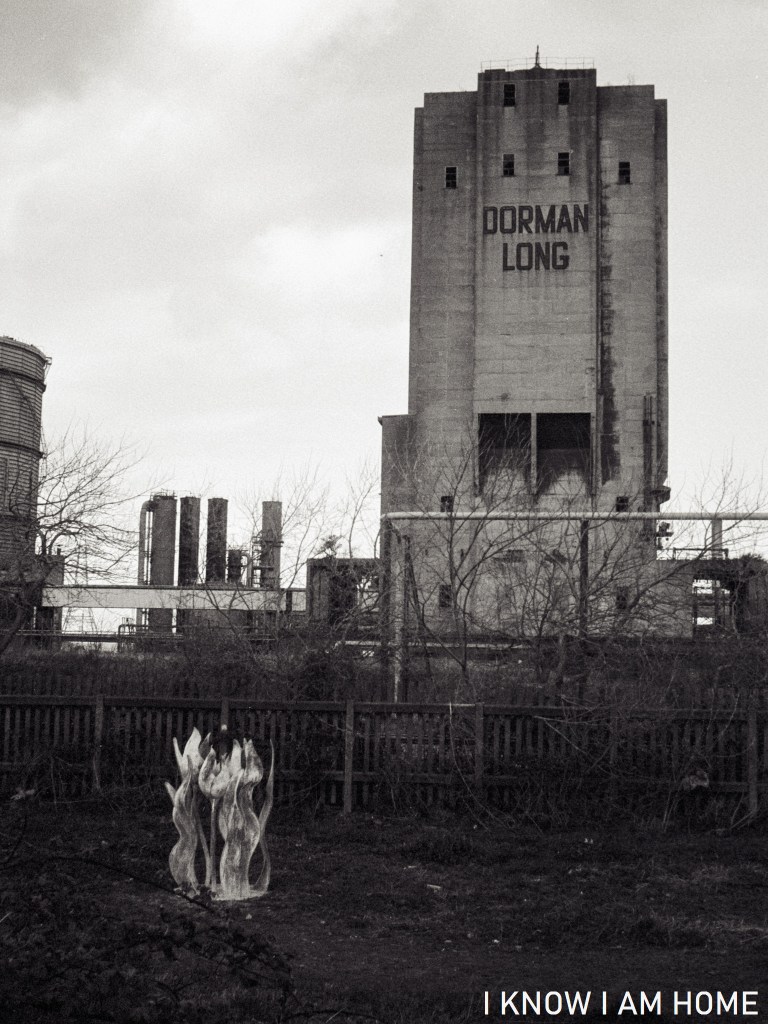
Fire Flowers – River Tees Rediscovered Sculpture Trail

Another of Steve Tomlinson’s excellent sculptures is this galvanised steel creation.

Symbolising the balance between nature and industry, something which is apparent in abundance in the hinterland of the Tees, the sculpture features leaping flames and growing flowers. Though as your angle of view changes heading along the path it’s sometimes hard to tell where one ends and the other begins – fitting, poetic really.

Where the fires burn…
South Bank (10/04/2021)
Camera: Chaika II
Lens: Industar-69
Film: Polypan F
Developed In: Ilford Ilfosol 3

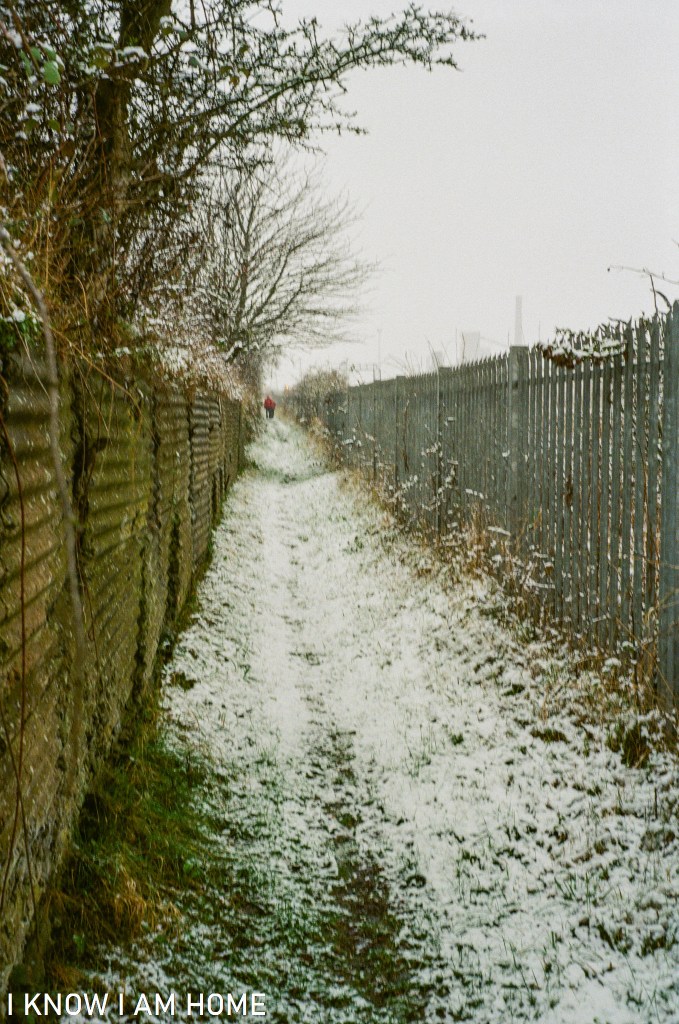
Walkers

Just after new year I passed some walkers on the Black Path, they’d been walking the full length of the Teesdale Way over the course of a few days – they were approaching the end of their walk that day.

Walkers
The Black Path, South Bank
(02/01/2021)
Olympus Trip 35
Kodak Ultramax

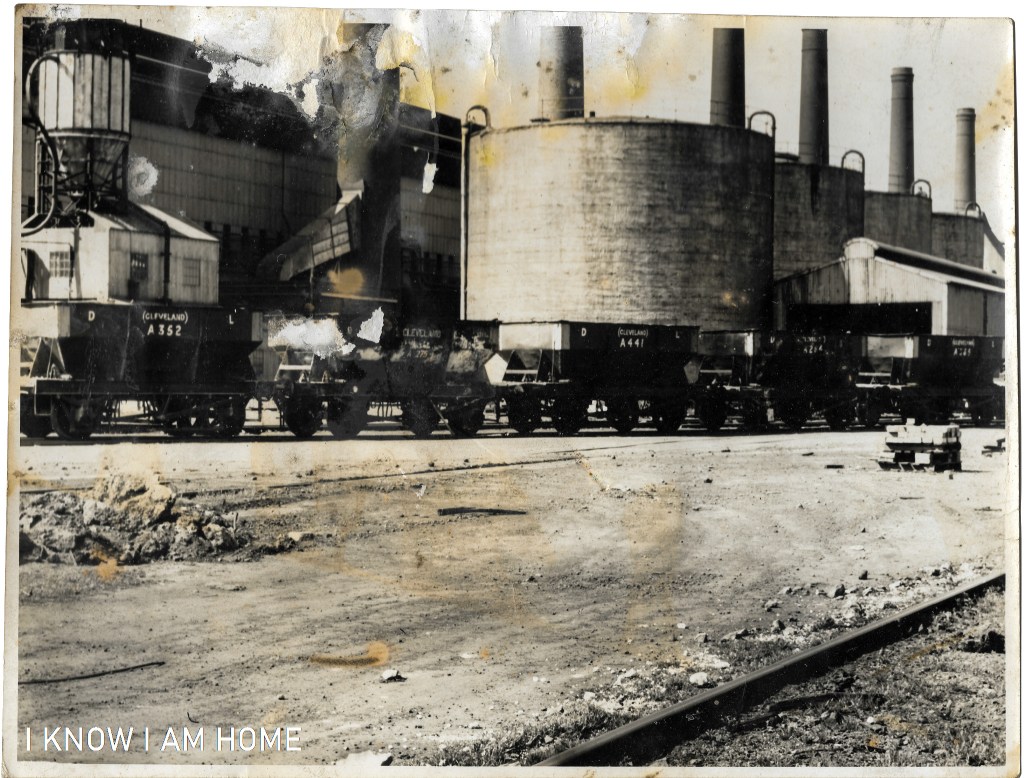
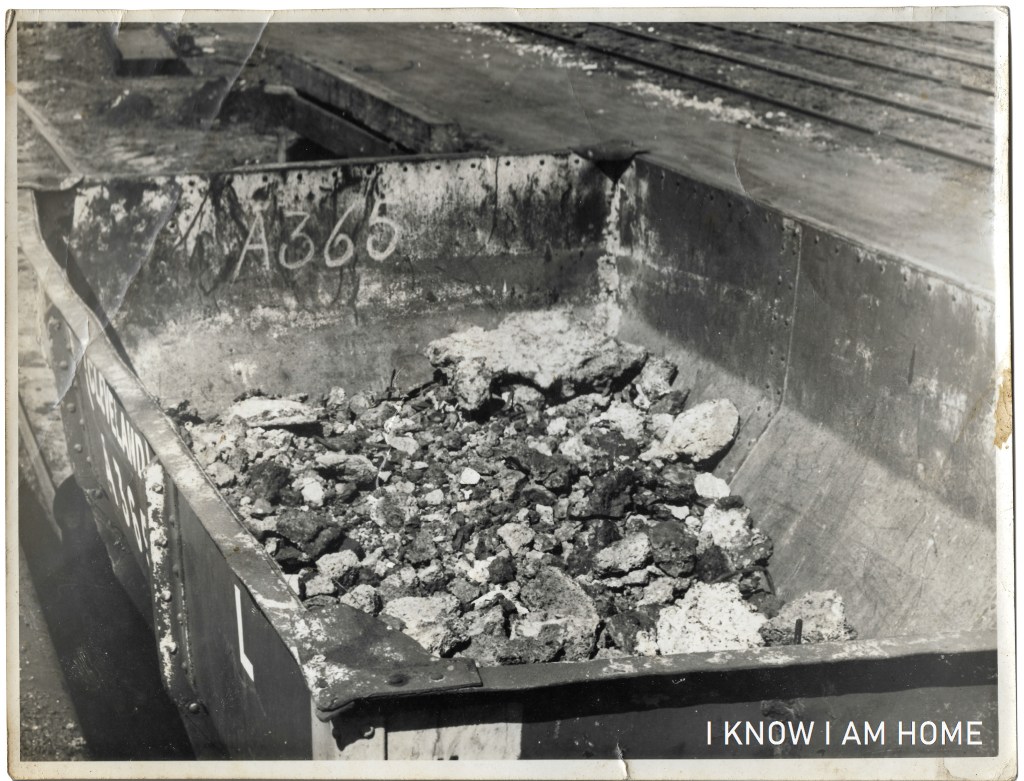
Lackenby Works – 1966

Here are two from a set of images which I have acquired via a house clearance. I wanted to share these, particularly as the area in which these were taken is ever changing. All of these images show scenes of bygone Teesside steel industries.

These two images were marked as May 1966, Lackenby Works.

Dorman Long Wagons
Wagon No. A365