Regularly on a Sunday I’ll have a wonder along the Black Path, alone or with a companion.
This time I was testing out a camera I’d rescued from a shop, a little compact point and shoot style (see the camera and gear page for more info on that if you’d like). I first went to Saltburn then on the way back stopped off at South Bank and took a little walk, using up the last of the film on the way…
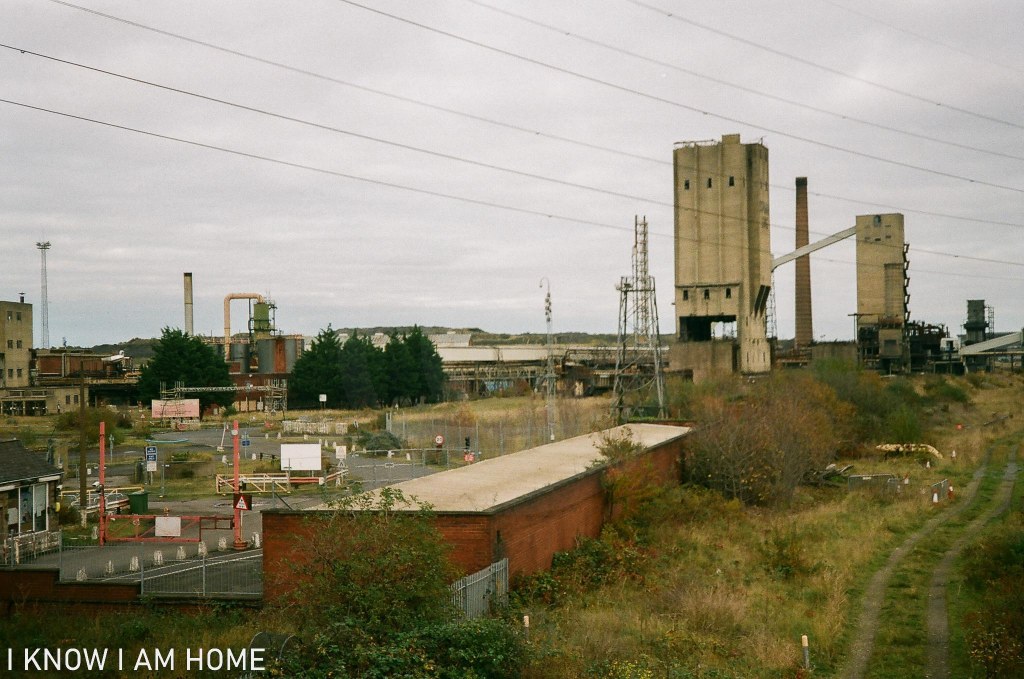
Minolta AF-DL
Fuji Fujicolor C200
The South Bank coke ovens site was the first point of call for the camera, I clambered up the steps of the railway footbridge, with their gaps and rusty handrails.
Heading down the steps again I joined the Black Path, and made progress along.
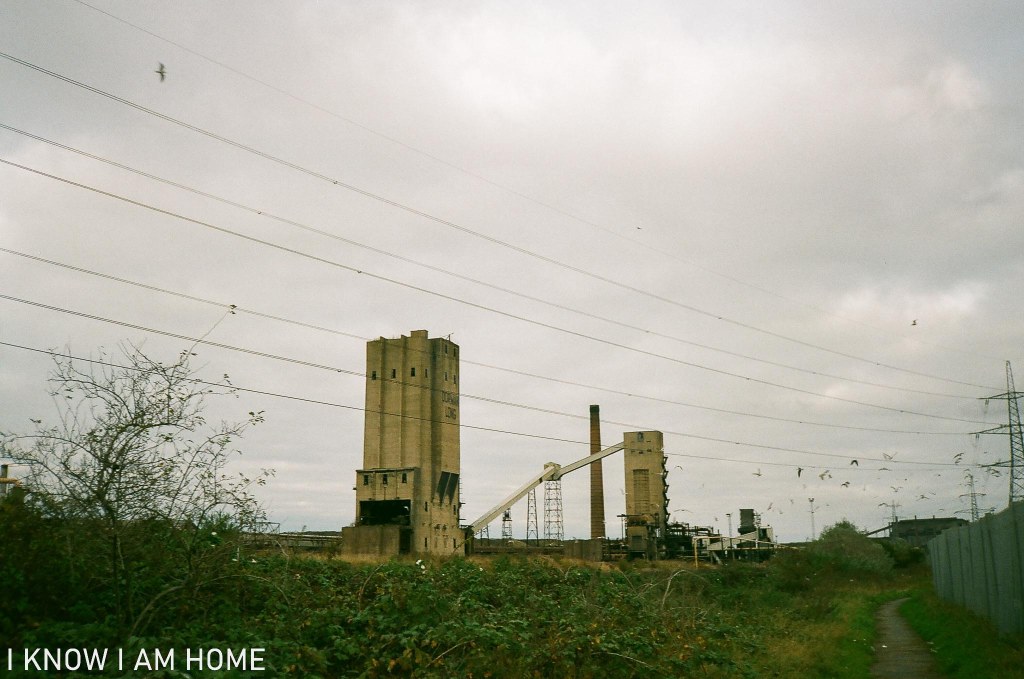
The Black Path (18/10/2020)
Minolta AF-DL
Fuji Fujicolor C200
I had my mask still on, pulled down past my chin to get some fresh air having just got off the train. I put it back up whilst walking past the recycling plant. My passing disturbed a colony of gulls.
The Black Path (18/10/2020)
Minolta AF-DL
Fuji Fujicolor C200
As I made my way along, the gulls settled back down again, a deer was startled from the scrubland, running away deeper into the industrial areas.
The Black Path (18/10/2020)
Minolta AF-DL
Fuji Fujicolor C200
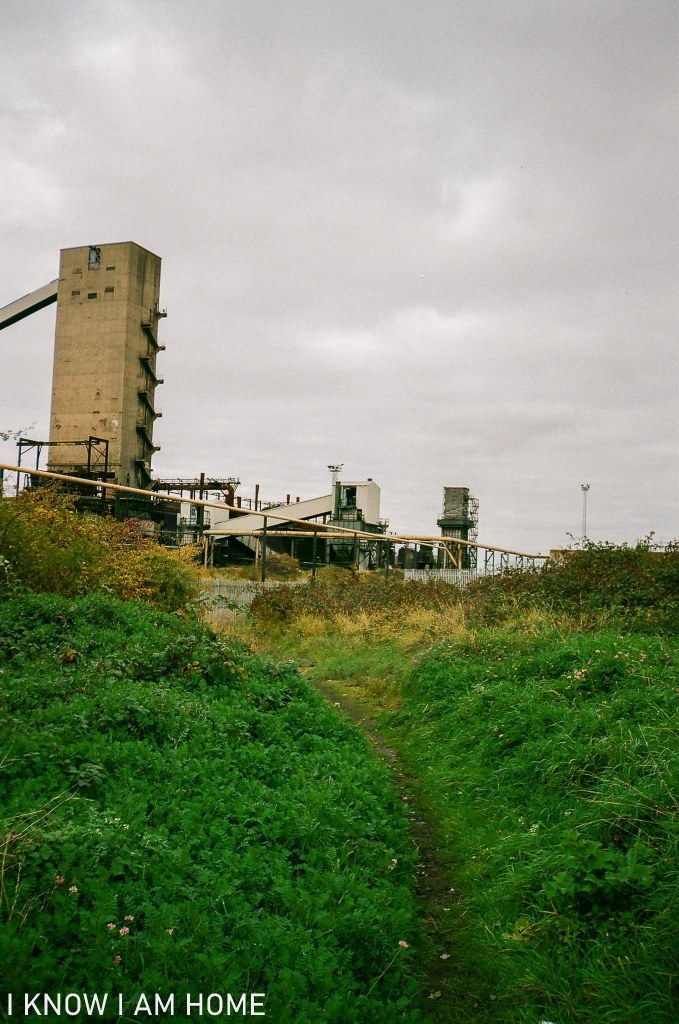
The path snakes toward the railway line, you walk between this and the pipes and the now steadily disappearing and changing land of gone industry.
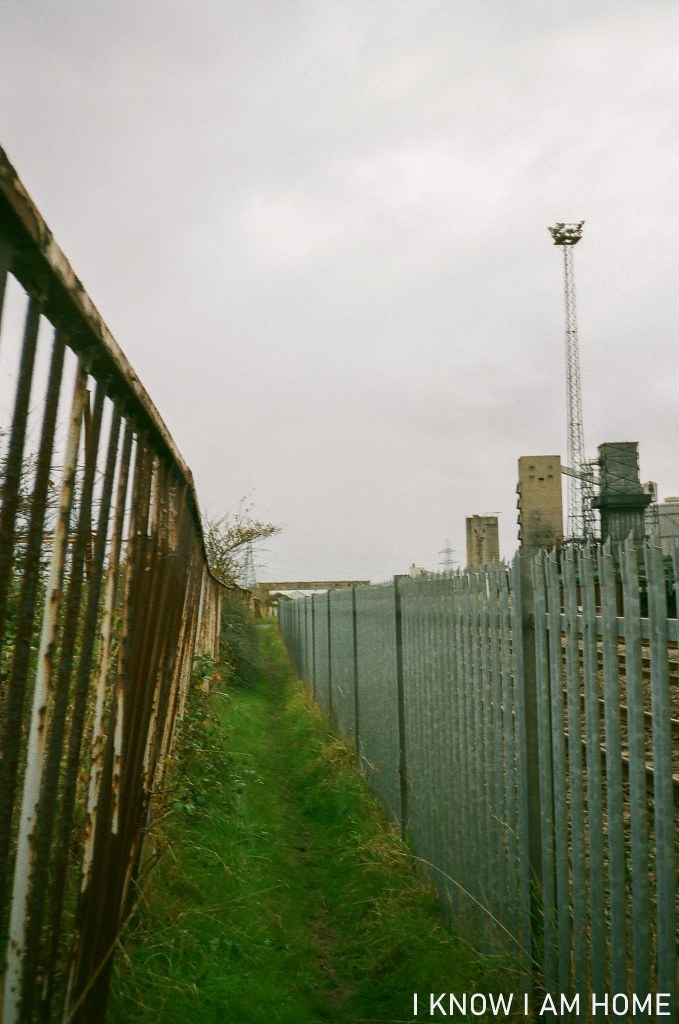
The Black Path (18/10/2020)
Minolta AF-DL
Fuji Fujicolor C200
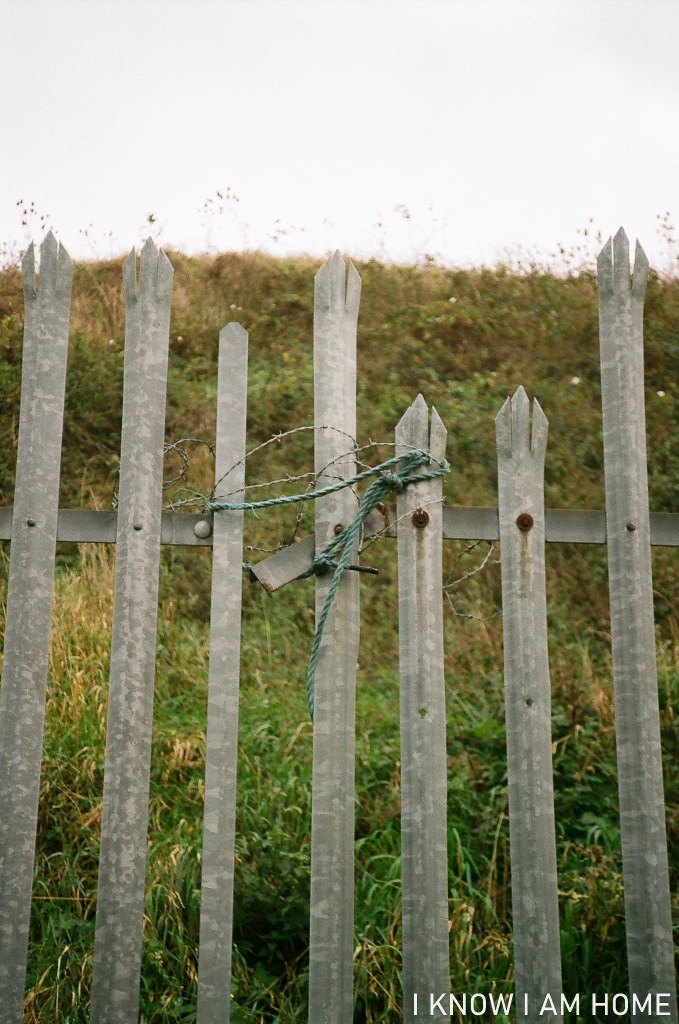
Bowed rusted fences contrast with the palisade by the railway line, and the obstructive shielding fences added along the way. You look back to see how far we have come…
The Black Path (18/10/2020)
Minolta AF-DL
Fuji Fujicolor C200
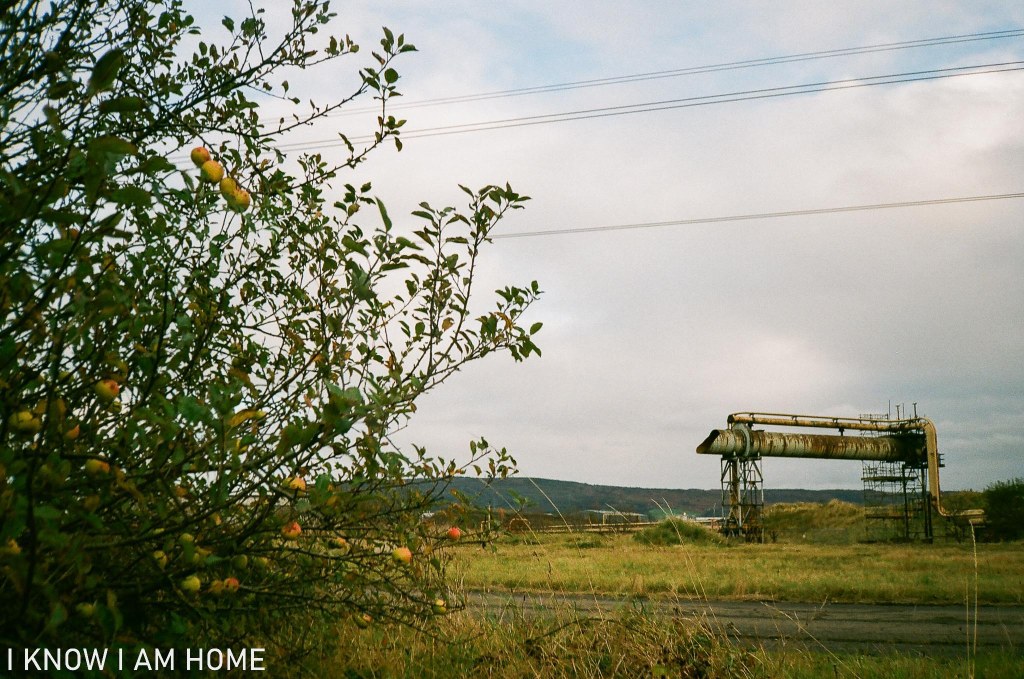
I turned back before reaching Grangetown Station, passing again my favourite bit of pipe…
The Black Path (18/10/2020)
Minolta AF-DL
Fuji Fujicolor C200
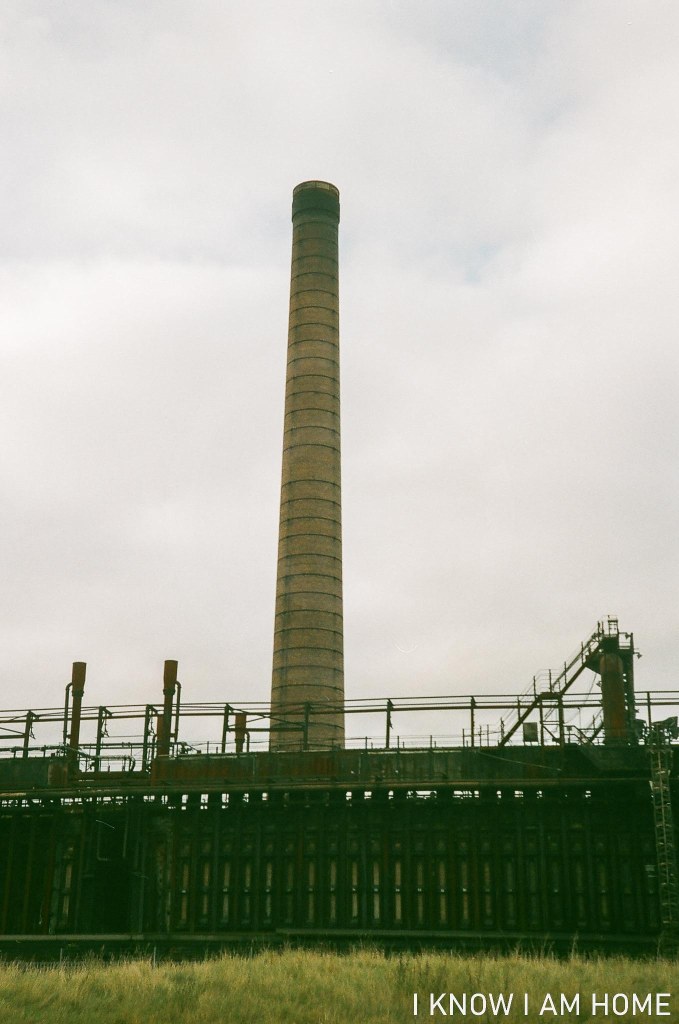
I looked over to the numbered coke oven batteries, as I walked back toward the railway station, I was slowly running out of film in the camera.
The Black Path (18/10/2020)
Minolta AF-DL
Fuji Fujicolor C200
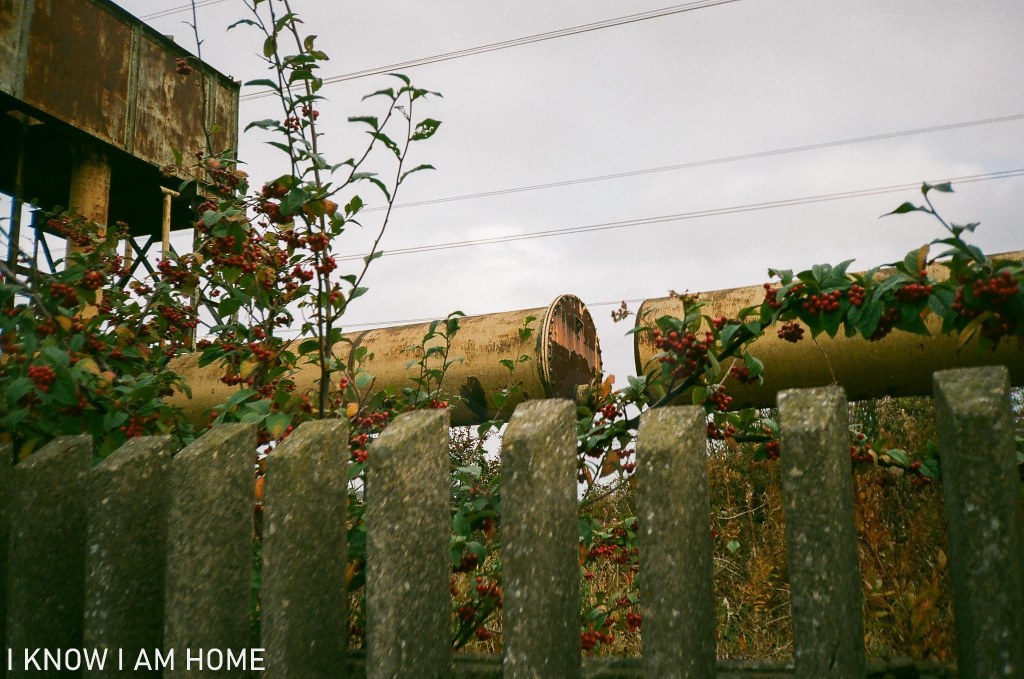
The Black Path is intriguing for so many different reasons, little things, things barely noticed. I’ve always found this gap in the pipeline interesting. I took the image above with the camera held overhead, hoping for the best.
The Black Path (18/10/2020)
Minolta AF-DL
Fuji Fujicolor C200
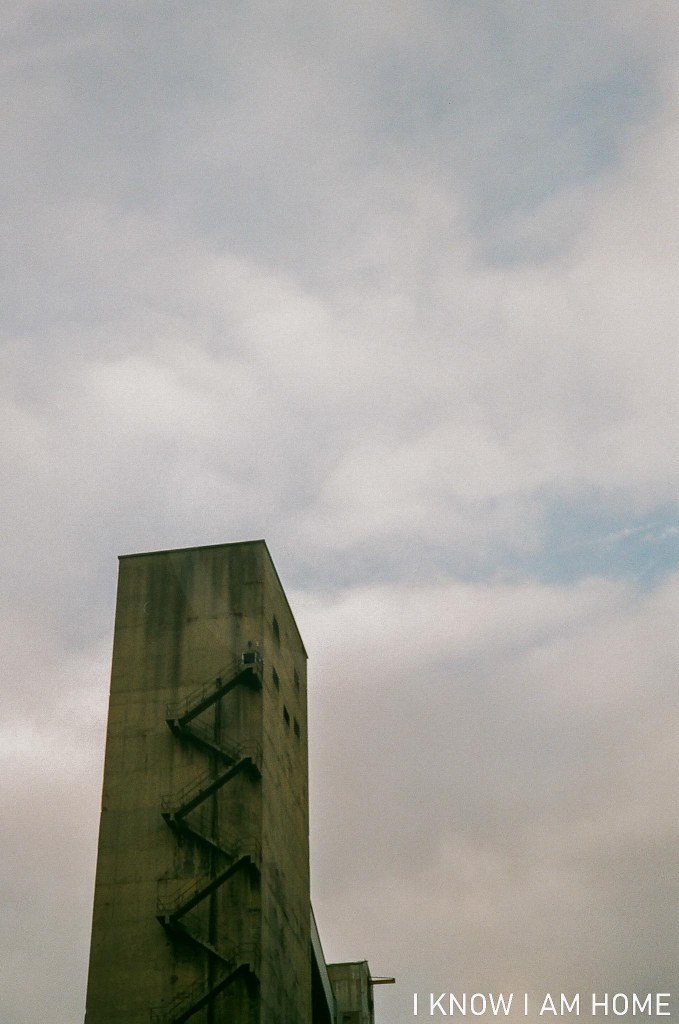
I was on borrowed time, film wise…
The Black Path (18/10/2020)
Minolta AF-DL
Fuji Fujicolor C200
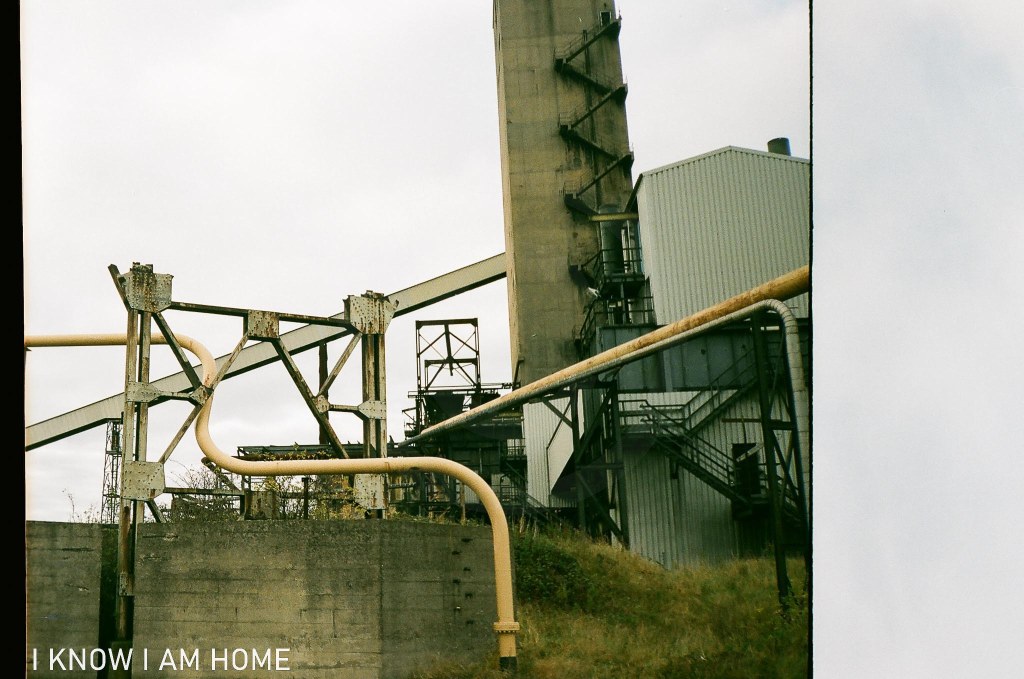
All good things come to an end, the roll of film did at this point and produced this image… I like the end product here, though it wasn’t how I hoped, but I don’t see the need to crop…
 I KNOW I AM HOME
The pipe with the section cut out is the Coke oven gas main from South bank coke oven to Lackenby works. The pipe eventually finished up at Redcar works coke ovens. It was part of a network which allowed surplus CO gas to be used for other parts of the works (re heat furnaces) The section cut out and blanked is a way of creating a secure isolation.
LikeLike
Thanks Steve. Glad to have an answer to the gap in the pipe work.
I do wonder how many miles of pipe there is still (and was) around the network.
LikeLike
There must be hundreds of miles ! A lot of it only small bore 25mm and below. The Coke oven gas mains were some of the worst to deal with due to the mixture of contaminants that the gas contained. If you cut into one like the one in the picture, say 300mm bore, the wall of the pipe would have a lining about 50mm thick round the inside, leaving a hole about 200mm for the gas to pass through. Pressure drops on the GOG lines was a continual problem. HP jetting out was a continuous job, with the contents being washed into skips for waste disposal. As a light aside, a couple of men and a tanker were employed to drain liquid condensate from these pipelines. The condensate had a very characteristic smell (like the gas works of old) Although they had an official title, they were always known as the ‘Smelly Gang’
LikeLike
Love the moniker of “The Smelly Gang”. Did they ever have any thing scrawled on their tanker, you know dirt with finger marks etc…
Were many days of production lost due to issues with the pipes then?
LikeLike
Surprisingly the tanker was kept relatively clean, so apart from the ‘Wash Me’ graphics I dont remember much finger text. The CO gas line usually blocked progressively, so from pressure and flow readings it was possible to forecast when a line would require a clean out. The cleaning was usually scheduled for periods when there was an area shutdown for maintenance. On smaller lines, like those to instruments, lines had a ‘Cross’ like a plus sign, The lines used two of the entries at 90 degrees. The other two were fitted with screwed plugs. By removing a plug and inserting a long twist drill, some of the pipe could be cleaned out. The process was then repeated the opposite way by removing the other plug. If you follow the pipelines by eye, you will see these ‘Rodding Points’ as they were known.
LikeLike