Tidal Stretch
I’m going to post a series of photographic posts looking at what has come to be known as the “Old River Tees” a stretch of what was once (perhaps now unbelievably) part of the River Tees’ route into Stockton, which at the time was a fast developing port.
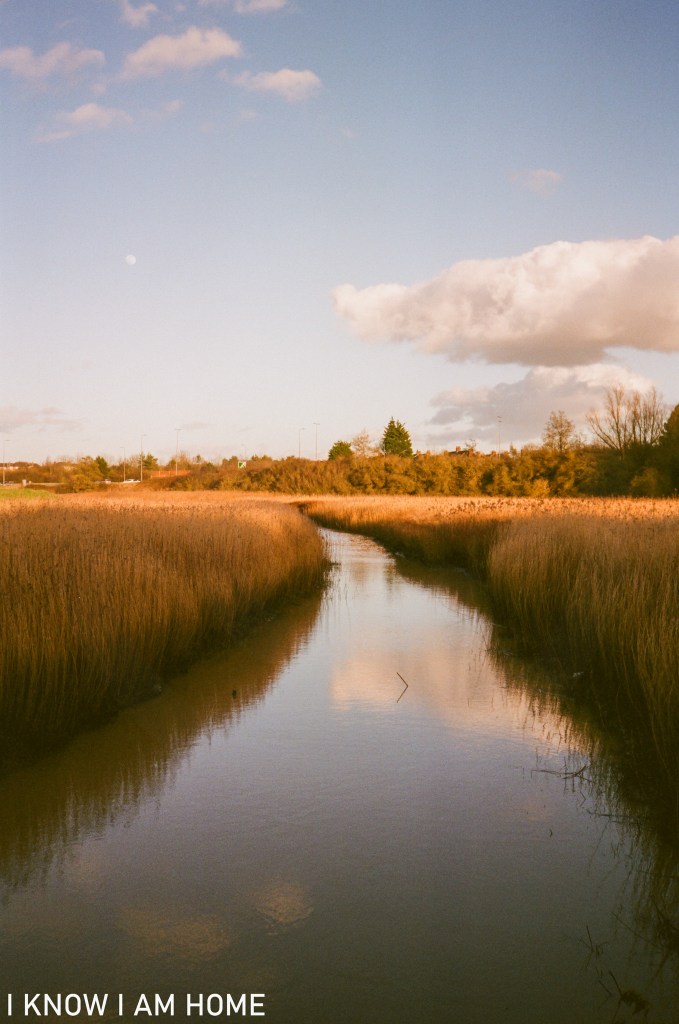
The Old River Tees (25/02/2021)
Minolta AF-DL
Fujifilm Superia Extra 400
The implausibility today (there are still people who I see on my walks along here who are unaware that this was the river, and not just a silted up tidal stream or tributary) is partly why the cut was necessary.
The removing of the lengthy loop was initially proposed in the early 1790’s. The “Old Cut” as it came to be known, which was just over 200 yards, was in order to save sailing cargo vessels negotiating the two mile meander of the Tees here.

The Old River Tees
Chaika II
Industar-69
Ilford XP2 Super
Even now without the sheer volume and force of water compared to days before the cut was made the waterway here still silts up, imagine what it would have been like as the tide receded in the days of sail and oar!
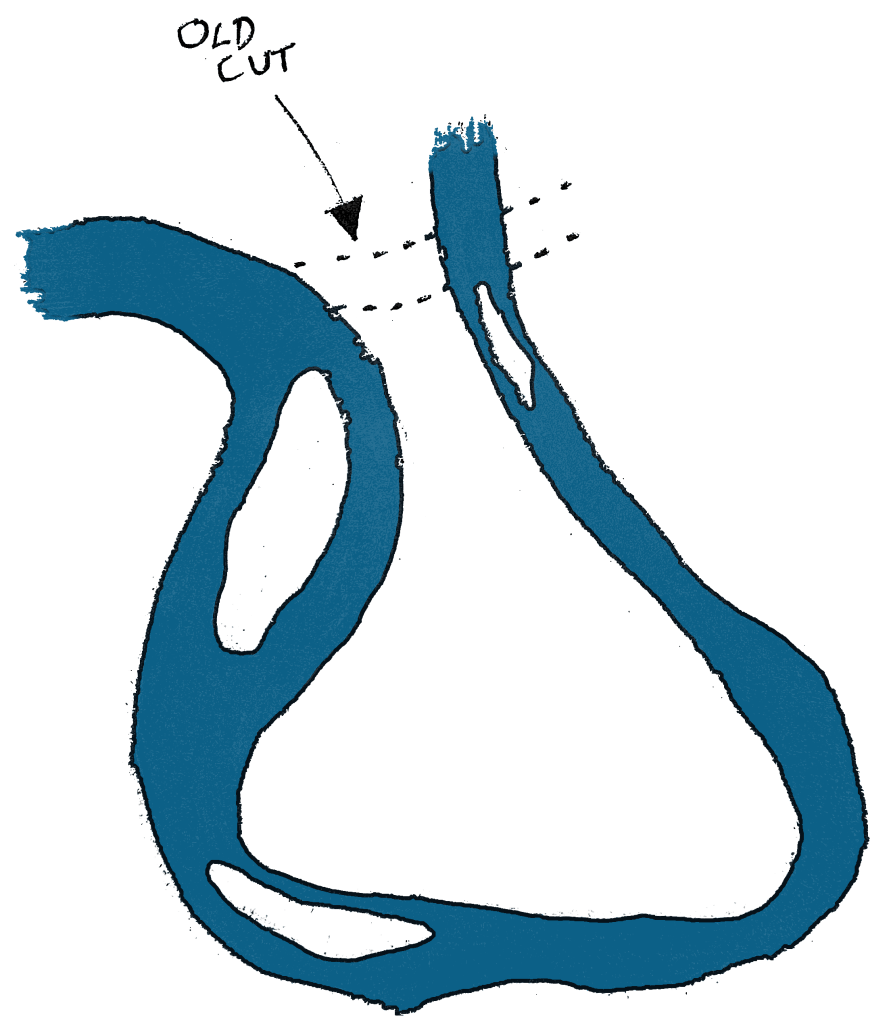
The obvious point being sailors could see the river they were travelling toward despite having to take some two miles of detour to get there. The old cut started and finished either side of the current location of the Tees Barrage. A further cut was made (and seen to the right of the Old Cut in my drawing) to eliminate a shorter meander at Portrack.
Often the vessels would not sail the stretches, rather they’d be hauled by large ropes in a process known as “tracking”, traversing the hazardous tidal stretches, which often became silted up. This not only allowed Stockton to flourish as a port and shipbuilding centre but it meant that the North Riding of Yorkshire acquired the land of the Mandale Marsh’s, which is now occupied by Teesside retail park and the golf course…
This section of the old river, from the tidal structure at the point of the above images to the start of the cut near the Tees Barrage remains fully tidal and is joined by Stainsby Beck (The Fleet).
Despite the clear need for the cut to be made in the Tees it would not be until 1810 however that the cut was completed and the Mandale meander was severed. Mainly due to objections by Lord Harewood, who owned land on the Yorkshire side of the river. He was concerned that his grain mill and associated river-side storage and business would be adversely affected by the change. Compensation was eventually offered and Lord Harewood agreed the cut.
Another cut in the Tees was made close by, known as “New Cut” this one removed a shorter meander which took in much of the land under Portrack Lane’s ASDA / industrial / other retail sites, encompassing the still existent Portrack Marshes.
The deviation of the river meander upstream was at a point under the current A19 Tees Flyover, with the cut being made between that point and a point near to the white water course (with the river originally carrying on as shown above to the Mandale meander). Both of these cuts removed around 4 miles from the river.
 I KNOW I AM HOME