Alpha Place Memorial

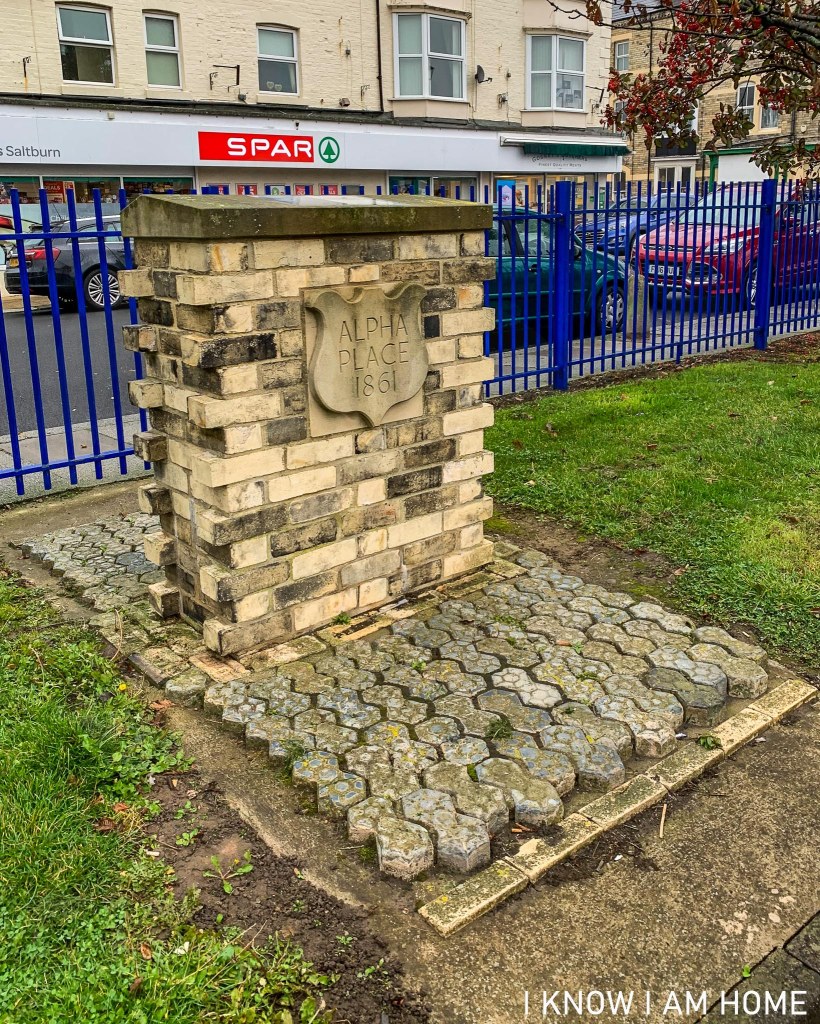
Unvailed in 2012, the Alpha Place memorial marks the site of the very first houses in Saltburn by the Sea.

The terrace of six houses were built during the early 1860’s, foundations laid in 1860. Then founder of Saltburn’ Henry Pease laying the foundation stone at a formal ceremony in 1861.

The first terrace became a victim of Saltburn’s success somewhat, it was demolished in 1901 as it became an obstacle of Milton Street obscuring the view of shop fronts here between Ruby Street and Garnet Street.

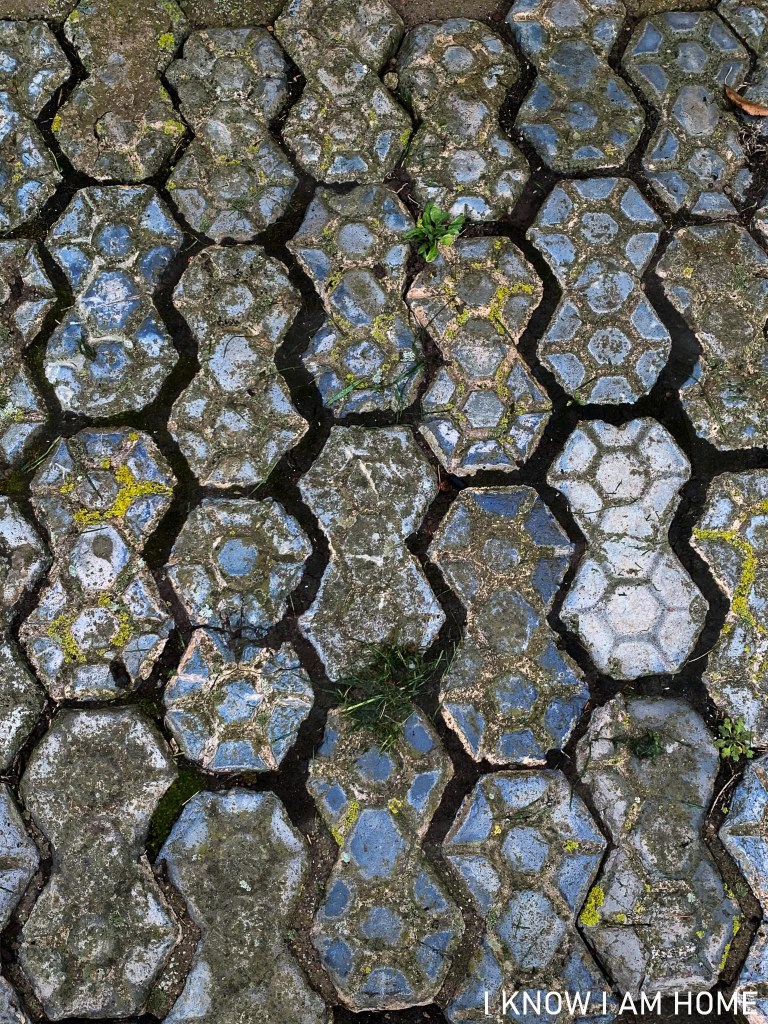
The memorial is formed of the distinctive light Pease facing bricks which were reclaimed from a chimney on Avon Street, and some of the interlocking Scoria brick which was previously on Gill Street. With further stonework from the original quarry used in Saltburn’s early buildings.

At the rear of the memorial is a tribute to those who contributed to the project;
Saltburn, Marske & New Marske Parish Council
The Alexandra Vaults
Alpha Place Band
Anthony Wharton
Brian Kennedy
Christopher Twigg
Executive Compass LTD
Felix & Georgia Sutcliffe
Freya North
Helen & Nigel Williams
James Duff
Martin & Paul Nesbitt
Proposed Company LTD
Rylee Prouse
The Victoria
Wendy Pegram
Windsor’s Bar

The Memorial was designed and executed by A Lynn MBE, C Duff, K Murray, J Upton, P Slater, E Guy and M Weatherill.

It is Callum Duff who project managed the memorial to whom I owe thanks for further information on the memorial.
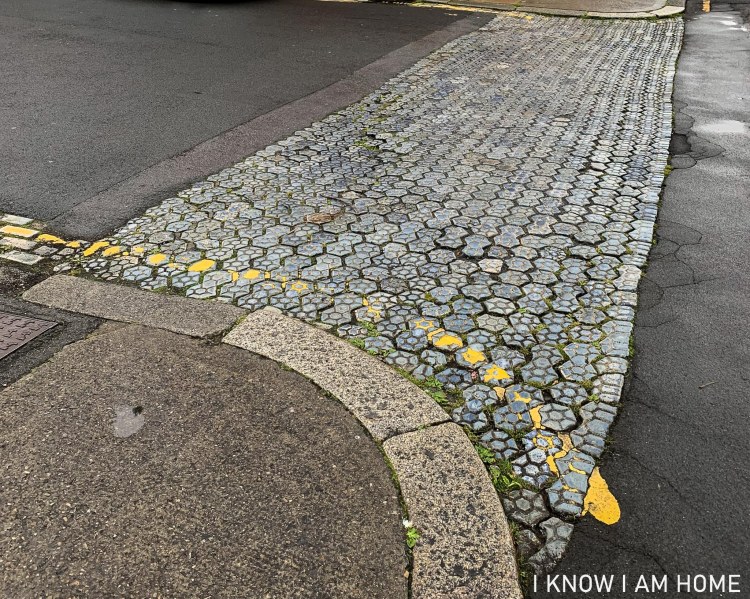
Grey-Blue Brick

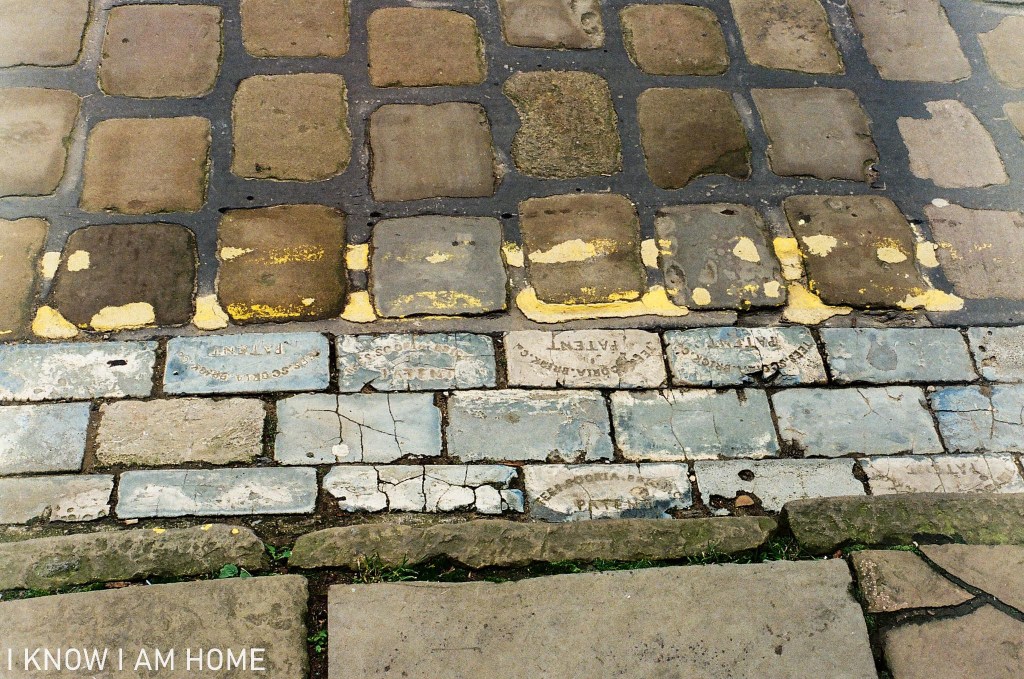
Scoria Brick, Staithes
Minolta X-300, Minolta 45mm lens
Kodak Ultramax 400

Created from the slag produced in the steel making process, the waste at the bottom of the blast furnaces was initially used in order to create land mass in the more boggy areas of a burgeoning industrial Teesside. Then it was removed and used to create walls on the River Tees.

It was then used to form a rudimentary insulating product.

Darlington’s Joseph Woodward in 1872 formed the Tees Scoria Brick Company and was turning the slag into these distinctive shiny grey-blue bricks. They were fired for three days and formed the durable, waterproof and chemical proof bricks which still line many roads in the Tees Valley.

These bricks, from the company are some of the more plain items produced, there were some beautiful ornate designs including double hexagonal designs which locked together.

The company went bankrupt in the 1960’s and was wound up formally in 1972.

This is certainly the most stamped bricks I’ve seen in a “gutter” setting, and they sit opposite the former Post Office in Staithes, now the Kessen Bowl.

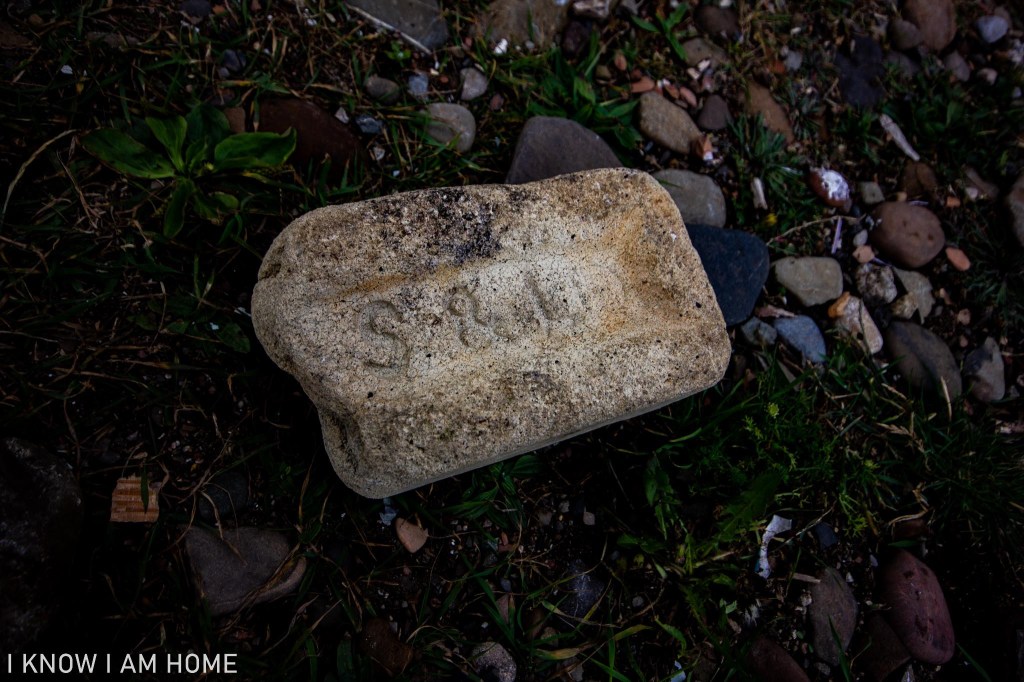
S&L

I found the water smoothed remains of a ‘white’ facing brick today whilst wandering on the shore.

This one was manufactured by Strakers and Love from the Brancepeth Colliery Brickworks in County Durham.

Strakers and Love had collieries at Brancepeth, Brandon, Willington and Oakenshaw. The partnership between Strakers and Love not only encompasses the collieries but also brick and tile works.

Indeed the transportation of the coal was also part of this concern. Joseph Straker owned an eponymous ship, sadly lost in 1875.

Strakers and Love despite being part of the Durham coalfield in the late 1800’s were headquartered in the Collingwood Buildings in Newcastle, and Joseph had took up residence in Tynemouth.